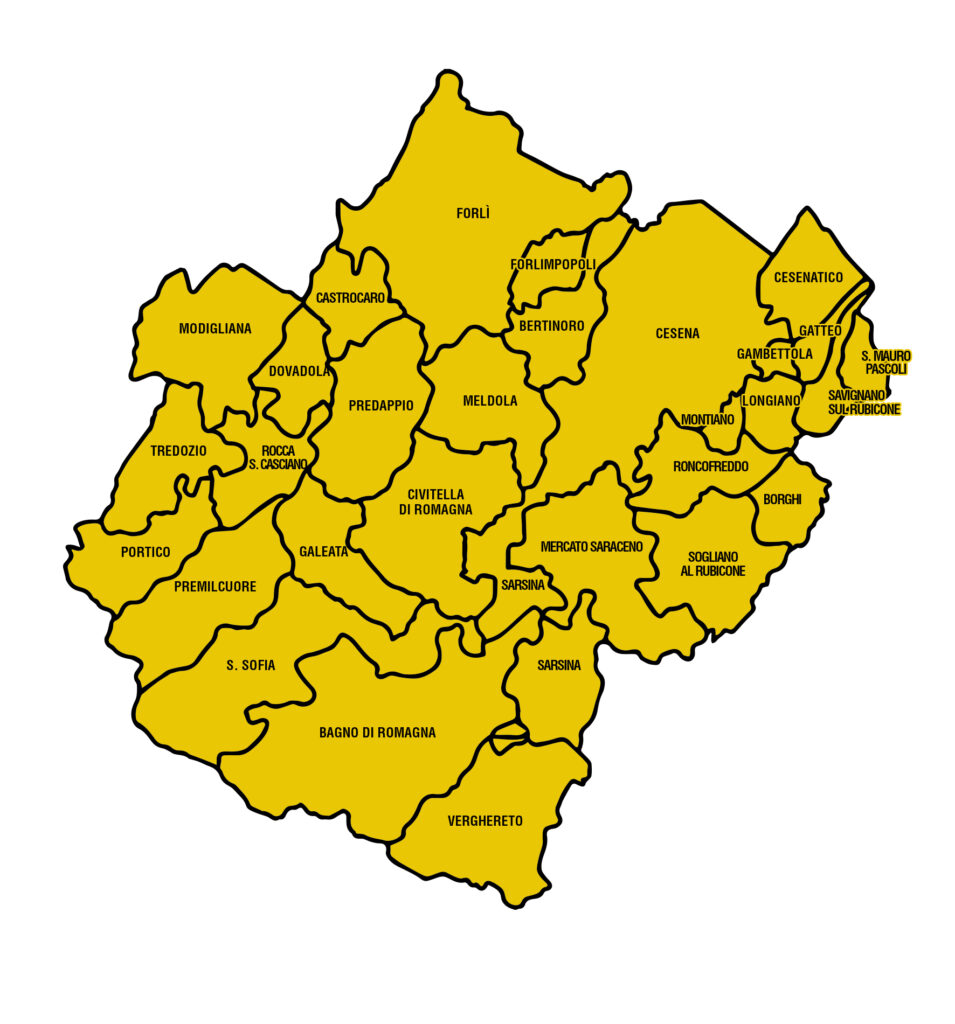
The Forlì-Cesena 30.0 project is the brainchild of Unica Reti SpA, a wholly publicly owned non-transferable company that owns networks, plants and equipment functional to the provision of water services and natural gas distribution. The company intends to pursue a project which gradually involves all 30 Municipalities that form the province with a two-speed dynamic:
The first involves the acquisition, upgrading and smarterization of public lighting systems in several Municipalities of the Province.
The IP pilot project has thus been launched in the first 5 Municipalities of Bagno di Romagna, Civitella, Gatteo, Mercato Saraceno and Modigliana.
In the coming months other Municipalities will join the pilot project to create a vast integrated network;
The second, more far-reaching, aspires to smarterize the entire territory as much as possible by creating the conditions to: introduce and consolidate all the latest digital technologies to achieve a single harmonious system of environmental and hydrogeological monitoring (taking advantage of the same networks that Unica Reti owns), manage soft mobility systems, creating a smart parking areas network and structuring a network of electrified parking stalls for both cars and e-bikes. In short, creating the condition for moving from the “smart city” status reserved for a few large urban centers to an integrated “smart land” for the whole territory.
Municipalities involved in the project
• Bagno di Romagna • Bertinoro • Borghi • Castrocaro Terme e Terra del Sole • Cesena • Cesenatico • Civitella di Romagna • Dovadola • Forlì • Forlimpopoli • Galeata • Gambettola • Gatteo • Longiano • Meldola • Mercato Saraceno • Modigliana • Montiano • Portico e San Benedetto • Predappio • Premilcuore • Rocca San Casciano • Roncofreddo • San Mauro Pascoli • Santa Sofia • Sarsina • Savignano sul Rubicone • Sogliano al Rubicone • Tredozio • Verghereto
Cisa’s role for over two years has been to support the planning and implementation of this project by providing assistance at multiple levels:
The support to the strategic development of the project
The preparation of the technical administrative tools for the redevelopment of public lighting systems
The economic and financial planning of each individual public lighting upgrading project
The assistance to the implementation phase of the public lighting installations with the assumption of the role of DEC